
Positioning a patient for kidney, spine, hip, or thoracic surgery requires more than a basic operating table. The table must provide stable support, clear imaging access, and safe positioning for long procedures. These needs define the key features of a lateral position surgical table. A good system should support the patient on either side, allow the surgical team to adjust the body position, and help reduce pressure on high-risk areas. For hospitals and procurement teams, these features are worth checking before choosing a table.
What Defines a Lateral Position Surgical Table?
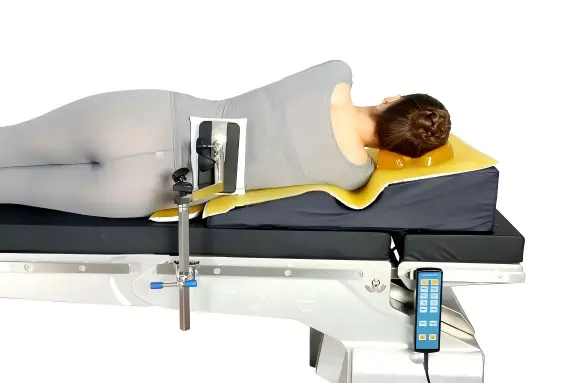
A lateral position surgical table is designed to support patients on their left or right side. The operative side faces upward. The patient needs firm support to prevent unwanted movement during surgery.
A standard operating table may not provide enough support for this position. A lateral positioning system usually works with padded supports, straps, arm supports, and leg supports. These parts help keep the head, shoulders, pelvis, and legs in a stable position.
The support system should also be easy for the surgical team to adjust. Kidney, spine, hip, and thoracic procedures can require different setups. A flexible system can reduce preparation time and help the team repeat the same setup for similar cases.
Key support features include:
Torso supports to reduce forward and backward movement
Padded arm and leg supports to protect the patient
Adjustable straps and side supports for stable fixation
Padding between the knees to reduce pressure and prevent leg movement
A good design should also work with common operating tables and operating room accessories. Hospitals can then use the system for more than one type of procedure.
Radiolucent Tabletop And Imaging Compatibility
Clear imaging is one of the most important features of a lateral surgical table. Spine, hip, and kidney procedures often use C-arm imaging. The table should allow the imaging system to reach the surgical area without major obstruction.
A radiolucent tabletop is usually made from carbon fiber or another low-attenuation material. It reduces interference with X-ray images. A long radiolucent area is especially useful for spine and orthopedic surgery.
The size of the imaging area matters too. A small window may work for one procedure but limit another. Spine surgery may require imaging across several levels. Hip surgery may need views of both the pelvis and upper leg.
The base and table column also affect imaging access. An open or low-profile base can give the C-arm more space to move around the patient.
Before purchasing, procurement teams should check the exact imaging area instead of relying only on the word “radiolucent.” It is also useful to confirm compatibility with C-arm, O-arm, or other imaging systems used in the hospital.
Hospitals that perform frequent spine procedures can also compare the table with spine surgery operating tables to find a setup that matches their imaging needs.
Adjustable Angles And Table Movement
Adjustable angles are another major feature of a lateral position surgical table. Different procedures require different patient positions. A table with a wider adjustment range gives the surgical team more control.
Lateral tilt is especially important. Many operating tables offer around 20° to 30° of movement to either side. This range can support lateral procedures and improve access to the surgical area.
Trendelenburg and reverse Trendelenburg are also useful. Around 30° in each direction is common on many operating tables. Some procedures may require a steeper Trendelenburg position.
Flex and reflex functions can provide another level of adjustment. The center of the table can be raised or lowered to change the shape of the patient’s body position. This is useful for kidney and abdominal procedures.
The back section and leg sections should also have suitable movement ranges. Head and leg supports need to work with the main table position. The goal is not simply to offer a large angle range. The controls should allow the surgical team to create a stable and practical position.
For hospitals with a mixed surgical workload, it is useful to compare these functions with electric operating tables. A motorized system can make repeated adjustments easier during surgery.
Pressure-Point Protection And Patient Safety
Patient safety is a major concern in lateral positioning. The body stays in contact with the table and support system for a long period. Pressure can build up around the shoulder, hip, knee, ankle, and side of the head.
Good padding helps spread the patient’s weight over a larger area. It also reduces direct pressure on sensitive points.
The head and neck need neutral support. The lower arm should have enough support. The upper arm needs a separate support to avoid excessive pressure on the shoulder.
The legs also need careful positioning. A pillow or padded separator between the knees can keep the upper leg stable. It also reduces contact between the knees and ankles.
The pelvis and torso need firm support. The supports should hold the patient securely without placing too much pressure on the body.
For longer procedures, hospitals should also consider the table mattress and padding material. A waterproof, easy-to-clean surface can support both patient comfort and infection control.
These features are closely related to the design of surgical table mattresses and other patient positioning accessories. A complete system is often more useful than focusing on the table frame alone.
Left And Right Lateral Positioning
A good lateral position surgical table should support both left and right positioning. This is important for hospitals that perform kidney, thoracic, spine, or hip procedures on both sides of the body.
The basic process is simple. The patient is usually prepared in a supine position. After anesthesia, the team turns the patient onto the non-operative side. The surgical side then faces upward.
The support system should allow the same setup on either side. Arm supports, torso supports, straps, and leg supports should be easy to move or reverse.
This type of flexibility can improve workflow. The team does not need a completely different setup for left and right procedures. It can also help maintain consistent patient protection.
For kidney surgery, a kidney support or bolster can be placed under the patient’s waist area. The table may also flex to increase the space between the ribs and hip. The exact position depends on the procedure and the surgeon’s preference.
Hospitals that perform frequent renal procedures can also compare options with kidney surgery operating tables to check whether the table provides the required support and flexibility.
Rail Compatibility And Accessory Support
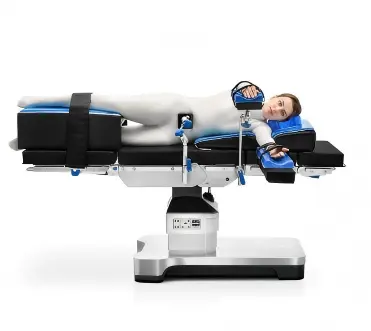
Accessory compatibility is easy to overlook during purchasing. It becomes important once the hospital starts adding clamps, supports, infusion poles, arm supports, or other equipment.
Different manufacturers may use different rail sizes and mounting systems. A clamp that fits one table may not fit another. The hospital may then need extra adapters or new accessories.
Before purchasing a lateral position surgical table, check the rail size and mounting system. Also confirm the load rating of the rail and the accessories that will be attached to it.
A standard rail system can simplify future upgrades. It can also allow hospitals to use existing accessories instead of replacing them.
Procurement teams should check:
-
Rail dimensions and mounting standard
-
Compatible clamps and positioning accessories
-
Maximum accessory load
-
Availability of adapters for existing equipment
Rail compatibility should be considered together with the hospital’s current operating room equipment. This helps avoid unnecessary accessory costs after installation.
Load Capacity And Structural Stability
A lateral position surgical table must remain stable under load. The table supports not only the patient but also positioning equipment and accessories.
Load capacity should be checked based on the actual operating position. Some tables may have a different safe load for certain positions or table movements.
The base should provide a stable foundation. Locking casters are also important. The table should stay firmly in place during surgery and repositioning.
Height adjustment is another useful feature. A suitable height range allows surgeons and nurses to work more comfortably. It can also help with patient transfer and anesthesia preparation.
Hospitals should review the full technical specification instead of looking only at the maximum weight rating. Stability, movement range, and locking performance all affect practical use.
As a medical equipment supplier, Grace Medy can provide operating table options for different hospital and procurement requirements. Buyers can compare specifications based on their procedures, imaging needs, and accessory systems.
Infection Control And Daily Use
A surgical table is used repeatedly in a demanding environment. Its surface should be easy to clean and disinfect.
Smooth surfaces are easier to wipe. Gaps and exposed joints should be limited where possible. Removable cushions should also be easy to clean or replace.
Water-resistant mattress materials can help protect the table during cleaning and routine use. Stainless steel and durable medical-grade materials can also support long-term use.
These details may seem small. They affect daily workflow and maintenance costs.
Hospitals should also consider how quickly the table can be prepared between procedures. Easy-to-remove supports and simple controls can save time for the surgical team.
How To Choose The Right Lateral Position Surgical Table
The best table depends on the hospital’s case mix. A table used mainly for kidney surgery may need strong lateral support and kidney positioning functions. A table used for spine surgery may place more importance on radiolucent coverage and C-arm access.
Before making a purchase, compare the table based on these core factors:
-
Imaging access: Check the radiolucent area and C-arm compatibility.
-
Positioning range: Review lateral tilt, Trendelenburg, flex, backrest, and leg movement.
-
Patient safety: Check padding, straps, supports, and mattress design.
-
Accessory compatibility: Confirm rail dimensions, clamps, and load ratings.
It is also useful to request detailed technical specifications. A live demonstration can provide more information than a product brochure. The surgical team can test the table with the imaging system and positioning accessories used in the hospital.
Conclusion
The right lateral position surgical table should do more than hold the patient in place. It should support safe positioning, clear imaging, stable fixation, and efficient surgical access.
Radiolucent tabletop design is important for spine, hip, and kidney procedures. Adjustable angles help the team create the required position. Good padding reduces pressure on vulnerable areas. Left and right positioning gives the table greater flexibility. Rail compatibility also affects the long-term cost of accessories.
For procurement teams, the best choice is the table that matches the hospital’s real surgical needs. Review the specifications carefully. Test the table with the equipment already used in the operating room.
Grace Medy supplies surgical tables and other operating room equipment for hospitals, distributors, and medical equipment buyers. Contact the team to discuss table configurations and positioning requirements for your operating room.