This guide cuts through all of that.
We researched and ranked the top wheelchair manufacturers in China for 2026 — electric, manual, foldable, and power wheelchair specialists included. So you can judge suppliers on what counts: production capacity, CE/FDA certifications, OEM capabilities, and proven export track records.
Placing your first bulk order? Switching suppliers? Either way, what follows saves you weeks of legwork.
Top Wheelchair Manufacturers In China (2026 Updated List)
China produces 60% of the world’s wheelchairs — over 2.1 million units per year — across more than 70 active manufacturers. This is not a niche industry. It’s a global supply chain with serious depth.
Here are the top manufacturers to know in 2026. The list covers electric, manual, power, and foldable categories.
|
# |
Manufacturer |
Founded |
Key Products |
Certifications |
|---|---|---|---|---|
|
1 |
2009 |
Electric wheelchair,Manual nwheelchair, commode |
CE, ISO |
|
|
2 |
Yongkang Goodbrother |
2010 |
Electric wheelchairs (OEM) |
CE |
|
3 |
Henan Yaosen Medical |
2011 |
Power, manual, scooters |
CE, ISO |
|
4 |
Jiangsu Yuwell Medical |
1998 |
Electric, manual, rehab equipment |
CE, ISO13485, FDA |
|
5 |
Satcon Medical |
2013 |
Electric, manual, commode |
CE, ISO13485, FDA |
|
6 |
Hubang Medical |
1998 |
Manual, commode, hospital furniture |
CE, ISO |
|
7 |
Intco Medical |
2009 |
Electric wheelchairs (OEM/ODM) |
CE, FDA |
|
8 |
Dongfang Medical |
1990 |
Manual, electric |
CE |
|
9 |
Zhongjin Medical |
2006 |
Wheelchairs, walkers, commode |
CE, ISO |
|
10 |
Wisking Healthcare |
2003 |
Power chairs, scooters, rehab |
CE, FDA |
What Makes a Reliable Chinese Wheelchair Manufacturer? (Buyer’s Criteria)
Certifications That Matter
Three certifications separate export-ready manufacturers from the rest:
CE certification is non-negotiable for the European market. Look for compliance with EN 12183 (manual wheelchairs) or EN 12184 (electric models). Don’t just accept a certificate PDF. Verify the NB institution name, confirm the certificate covers your exact product model, and check the expiry date. Most certificates run 3–5 years before renewal.
FDA 510(k) is your threshold for the US market. Manual and electric wheelchairs fall under Class II devices. Without it, major DME distributors and insurance-covered procurement programs won’t touch the product. Cross-reference any 510(k) number on the FDA database to confirm it’s real.
ISO 13485 tells you the factory runs a documented quality management system — batch traceability, CAPA processes, internal audits. Confirm the certifying body is one of the recognized names (TÜV, BSI, SGS). Also check that the scope covers wheelchair or mobility aid manufacturing — not just trading.
Production Scale and OEM Capability
A factory’s annual output tells you a lot. Mid-sized export manufacturers produce 50,000–200,000 units per year. Below 50,000, their ability to handle large or repeat orders becomes a real concern.
OEM buyers should ask upfront what’s customizable: frame color, cushion material, logo application, control systems on electric models. Standard branding changes take 7–15 days for sampling. Structural modifications — adjusted wheelbase, folding mechanism changes — fall into ODM territory. Those take 20–45 days and may need re-certification.
MOQs to benchmark against:
– Manual wheelchairs: 50–200 units per model
– Electric wheelchairs: 10–50 units for trial orders
– Customized or carbon fiber models: 200–500 units
Standard payment terms run 30% upfront, 70% before shipment.
#1 Grace Medy Group
Grace Medy has been making medical equipment in Zaoqiang County, Hengshui, Hebei Province since 2009. It started as a hospital furniture business. Today, it runs a 32,000㎡ smart manufacturing facility and ships to medical institutions in 150+ countries.
Founded: 2009
Location: Hengshui, Hebei Province, China
Factory Size: 32,000㎡
Certifications: CE, ISO 13485, ISO 9001
Key Export Markets: Southeast Asia, Middle East & North Africa, Latin America, Eastern Europe
What They Make
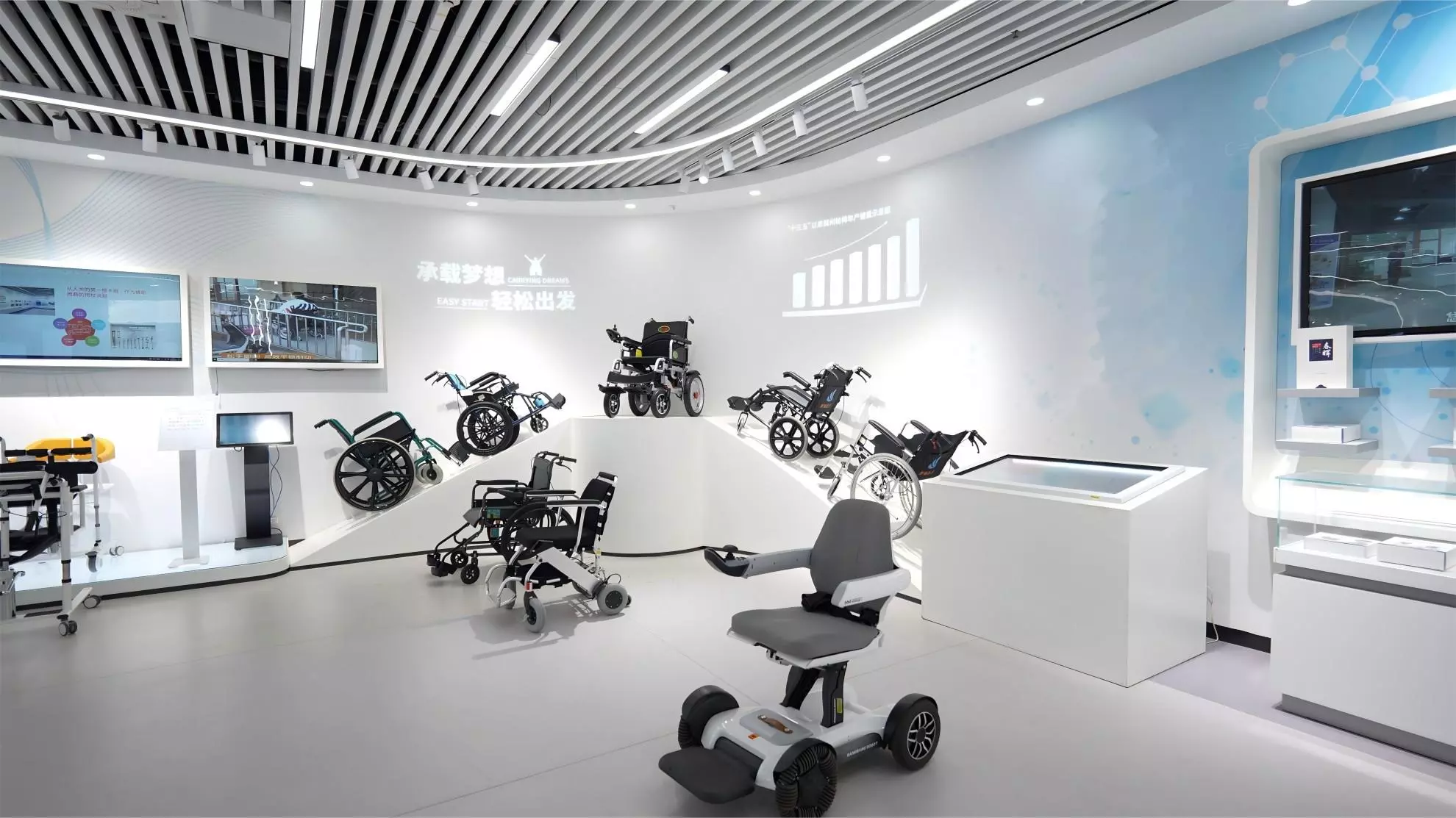
Grace Medy’s main focus is hospital furniture — Electric wheelchairs,Manual wheechairs,electric nursing beds, manual care beds, IV chairs, examination tables, and transport trolleys.
Their production lines already include steel and aluminum welding, powder coating, caster assembly, and motor and control integration for electric beds. That setup maps well onto wheelchair manufacturing. The core fabrication know-how is already in place.
Buyers exploring manual wheelchair OEM or basic commode wheelchair production will find Grace Medy’s structural capabilities a solid starting point. Electric wheelchair development is also an option — especially for buyers ready to go through a sampling phase using proven off-the-shelf motor and controller parts.
Pricing Benchmarks
|
Product Type |
Estimated FOB Price |
|---|---|
|
Standard manual wheelchair |
US$45–90/unit |
|
Commode wheelchair |
US$55–110/unit |
|
US$60–130/unit |
|
|
Basic electric wheelchair |
US$280–600/unit |
Their hospital furniture focus means prices run a bit higher than low-end Yiwu factories. But the weld quality and surface finish meet hospital-grade standards built for long-term institutional use.
MOQ and Lead Times
Grace Medy does not publish MOQs. Based on standard terms for Chinese medical equipment exporters at this scale, here’s what to expect:
Standard models: 10–20 units minimum per model (container mix-loading with other products is common)
Custom/ODM projects: 50–100 units to cover tooling and development costs
Sample units: Ask about single-unit sampling — it’s essential for regulatory testing
Lead times follow a clear pattern:
– Small batches under 20 units: 15–25 days
– Standard container orders (50–150 units): 30–45 days
– New tooling or structural changes: add 15–30 days
Where They’re Strong
The bundled procurement option is a real advantage. Equipping a hospital ward or filling a government tender? You can source beds, IV chairs, transport trolleys, and wheelchairs from one supplier. That cuts logistics complexity, lowers shipping costs, and gives you solid price leverage.
Bottom line for buyers: Grace Medy is the right fit for institutional procurement projects, OEM buyers building out a broader medical product range, or distributors in CE-required markets who need solid mid-range manual and commode wheelchair production alongside other hospital furniture.
#2 Yuwell Group
Yuwell is not just a wheelchair factory. It’s a listed medical device company — trading on the Shenzhen Stock Exchange (002223.SZ) — with annual revenues of ¥7.955 billion RMB in 2024. That financial scale tells you a lot before you even look at a single product spec.
Founded: 1998
Location: Jiangsu Province, China
Certifications: CE, ISO 13485, FDA
Key Export Markets: Southeast Asia, Europe (Germany, France, Italy, Spain), Latin America, Middle East, North America
Product Line
Wheelchairs fall under Yuwell’s Clinical Devices and Rehabilitation segment. That division posted 3.32% year-on-year growth in 2024. Not explosive, but steady. The segment also covers surgical instruments and infection control products. Within that mix, wheelchairs stand out as a reliable growth category.
The product range covers three tiers:
Manual wheelchairs — steel and aluminum frames, 16–20 inch seat widths, load capacity up to 120 kg, foldable backrests and removable footrests. Built for home and institutional use.
Lightweight travel wheelchairs — folding models at 9–13 kg. Good for short-distance mobility and caregiver transport.
Electric wheelchairs — 24V lithium battery systems (10–20Ah), 15–20 km range, electromagnetic braking, joystick control. Folding electric models weigh 25–35 kg and retail between ¥3,500–5,500.
The electric lineup comes in two main setups. The A-series runs a 12Ah battery with ~15 km range and handles 100–120 kg loads. The B-series steps up to 20Ah, ~20 km range, and a 130 kg load capacity. That second option targets long-term rehab users and care facilities.
Who It’s Right For
Yuwell sells internationally through layered regional networks. You’ll find importers and pharmacy chains in Southeast Asia, distributor partnerships across Europe, and agent-based arrangements in Brazil, Saudi Arabia, and the UAE.
Here’s the honest picture for international buyers: Yuwell operates as a brand-first supplier, not a pure OEM factory. Their gross profit history sits around ~50%. You’re paying for brand infrastructure, a deep quality management system, and the market credibility that a company this size carries.
That’s a good fit for distributors entering markets where brand recognition gives you an edge. It’s less ideal if your main goal is white-label production at sharp FOB pricing. In that case, the more OEM-focused manufacturers on this list will offer you better commercial terms.
#3 Innuovo
Twenty years of building electric wheelchairs leaves a mark. Innuovo’s track record shows up in the numbers: 2,300+ patents, participation in 36 national standards, and a carbon fiber electric wheelchair under 10 kg.
Innuovo is the health equipment arm of Innuovo Technology Co., Ltd. The parent company trades on the Shenzhen Stock Exchange (stock code: 000795), listed since August 1997, with registered capital of ¥1.134 billion RMB. This is not a factory with a brochure. This is a stock-listed manufacturer with two decades of documented R&D behind every product.
Founded: 1997 (listed)
Location: China
Certifications: ISO 13485
Key Export Markets: USA, UK, France, Germany, Canada, Spain, Japan, Southeast Asia
What They Make
The product line covers electric wheelchairs, electric scooters, electric transfer lifts, and walking aids. The flagship product is the electric wheelchair. Innuovo builds around what they call “high-end intelligent mobility.” That phrase has real backing. The carbon fiber models hit a sub-10 kg frame weight — and that is hard to deliver at production scale.
R&D focus points to lightweight materials and smart-system integration: sensors, adaptive controls, and connectivity features. For buyers selling into premium markets, that direction matters. Products like these hold shelf space and support stronger retail margins.
Who Should Work With Innuovo
Two buyer types are a strong fit here:
Volume OEM/ODM buyers who need a manufacturer with a tested export track record across North America and Europe
Premium channel brands who want lightweight, tech-forward electric wheelchairs that support higher retail price points
Basic manual wheelchair production is not Innuovo’s focus. Other suppliers on this list serve that need better.
How to Source Wheelchairs from China: Step-by-Step for International Buyers
Sourcing wheelchairs from China is straightforward. Stop treating it like a guessing game. Treat it like a process instead.
Here’s the sequence that works.
Step 1: Build a Spec Sheet Before You Contact Anyone
Don’t send a vague inquiry. Send a table. Define your product before approaching factories:
Frame material: Carbon steel (FOB ~US$50–120/unit) or aluminum alloy (US$80–200/unit)
Safe working load: 100 kg, 120 kg, or 150 kg+
Target weight: ≤16 kg for aluminum entry-level; 20–22 kg for steel
Certifications required: CE + ISO 13485 minimum;
For electric models, add these extra specs:
Motor output: ≥250W × 2
Real-world range: ≥15 km at 75 kg load on a flat surface at 20°C
Battery spec and folding dimensions
Step 2: Audit Before You Commit
Three options, scaled to your order size:
Online audit (SGS/BV report): Good for trial orders under US$10,000.
Third-party pre-shipment inspection: ~US$250–350/day. Use this for orders above US$20,000.
Factory visit: Budget US$1,500–3,000 per trip. Worth it at US$100,000+ annual volume.
Step 3: Test Samples Against Real Criteria
Check what fails in real use. Run these tests on every sample:
Folding mechanism: Complete 2,000–5,000 open/close cycles. Look for cracking or failure.
Electric motor: Run sustained climbing at 6° for 10 minutes. Motor temperature must stay under 90°C.
Battery range: Run a full discharge at 75 kg load on flat ground. Compare your actual kilometers to the factory’s stated figure.
Conclusion
Finding the right wheelchair manufacturer in China can feel overwhelming. Without solid information, you end up going in circles.
The manufacturers on this list are the strongest options for 2026. They’re vetted, export-experienced, and meet international compliance standards — from CE to FDA. Need a high-volume OEM partner? Looking for a specialized supplier for power wheelchairs or foldable mobility aids? This shortlist gives you a real head start.
Here’s what to check before you move forward:
Verify certifications on your own — don’t rely on what suppliers claim
Request samples before committing to any MOQ
Prioritize suppliers with a proven export record to your target market
Ready to cut through the guesswork? Put Grace Medy Group at the top of your list. It’s built for international buyers who need real reliability — not just a low price.
The best sourcing decisions aren’t made on price alone. They’re made on trust — and trust starts here.