
Introduction
Have you ever noticed that a surgeon can work under a bright operating room light without being disturbed by dark shadows from their hands or instruments? This is not magic. It is the result of careful lighting design and basic optical science. Understanding the science of why do surgical lights cast no shadow helps explain how modern operating room lighting supports clear vision during surgery. Unlike ordinary ceiling lights, a shadowless surgical light uses several light sources and carefully designed reflectors or lenses. These parts work together to reduce dark areas and provide even illumination across the surgical field. But how does this happen? Let’s explore the science behind it.
1. Why Do Ordinary Lights Cast Shadows?
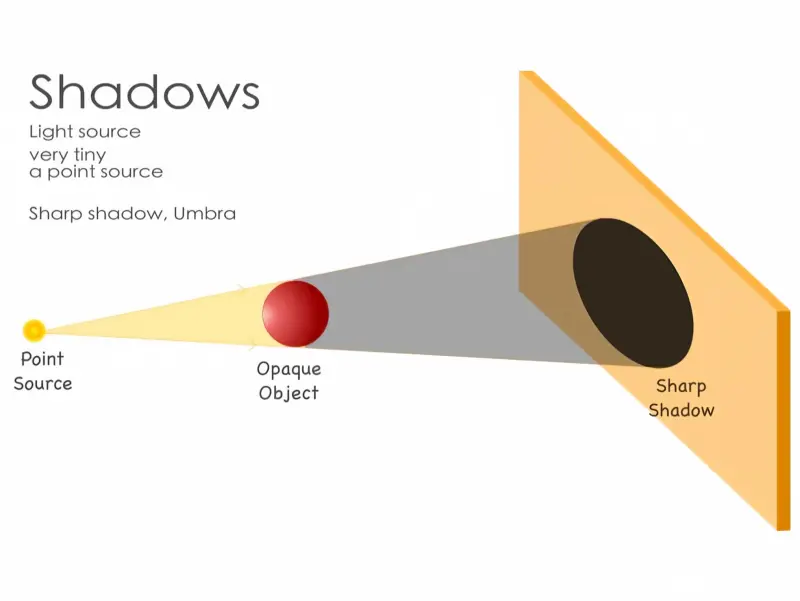
To understand shadowless lighting, we first need to understand how normal shadows form.
Light usually travels in straight lines. If an object blocks the light, the area behind it receives less light. A shadow appears on that area.
For example, place your hand under a desk lamp. You will see a dark shape on the table. Your hand blocks the light from reaching part of the surface. This creates a clear shadow.
The same thing happens in an operating room. A surgeon’s head, hands, or medical instruments can block the light. A traditional single-source lamp may create dark areas around the surgical site.
This is a serious problem during surgery. Doctors need to see small details clearly. A dark area can hide important tissue structures and make some tasks more difficult.
Ordinary room lighting is designed to illuminate a general space. Surgical lighting has a different purpose. It must provide strong, focused, and even light directly onto the surgical area.
That is why hospitals use specially designed surgical lights instead of relying on ordinary ceiling lamps.
2. The Main Science Behind Shadowless Surgical Lights
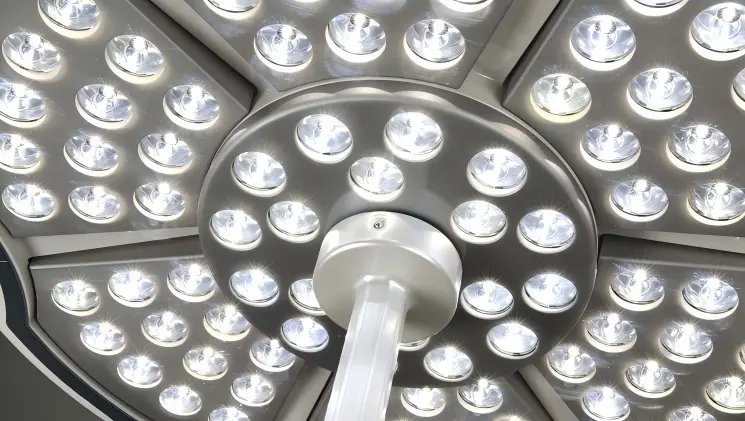
The secret behind a shadowless surgical light is simple: it does not depend on just one light source.
Instead, it uses many light sources arranged across a large lamp head. Each source sends light toward the same working area from a slightly different angle.
Imagine several people shining flashlights at the same object. If one person blocks one flashlight, the other flashlights can still light the object.
Modern surgical lights use a similar idea.
When a surgeon’s hand blocks light from one direction, light from other directions can still reach the surgical area. The blocked part becomes less dark because the remaining light fills much of the area.
This process is called shadow dilution. In simple words, it means reducing the darkness caused by an object blocking the light.
The light beams overlap in the same working area. They create more even illumination and help prevent one object from creating a large, dark shadow.
This is the basic reason why modern shadowless operating lights can provide clear visibility even when several people work around the patient.
It is important to understand that shadowless does not mean that shadows disappear completely. No light can pass directly through an opaque object. The real goal is to reduce shadows so they do not seriously affect the surgeon’s view.
3. How Multiple Light Sources Work Together
Multiple light sources are one of the most important parts of a modern surgical light.
A traditional lamp may send most of its light from one central point. If an object blocks that point, a strong shadow can appear.
A modern LED surgical light distributes many light sources across the lamp head. Each LED produces its own beam. The beams are directed toward a common area.
This arrangement offers several advantages.
First, light comes from different directions. A surgeon’s hand may block some beams, but other beams can still reach the operating area.
Second, the overlapping beams help keep the light field bright and balanced. The surgical area does not become completely dark because of one obstruction.
Third, the wider light distribution helps reduce the effect of movement. Surgeons and assistants often change their positions during an operation. A well-designed light can maintain useful illumination during these movements.
The number of LEDs is important, but it is not the only factor. Their position, spacing, beam direction, and optical design also affect shadow control.
A lamp with many LEDs will not automatically perform better. The overall arrangement must be designed to distribute light evenly.
For this reason, buyers should look beyond the LED count when comparing different LED surgical lights.
4. Why Is the Surgical Light Head Usually Large?
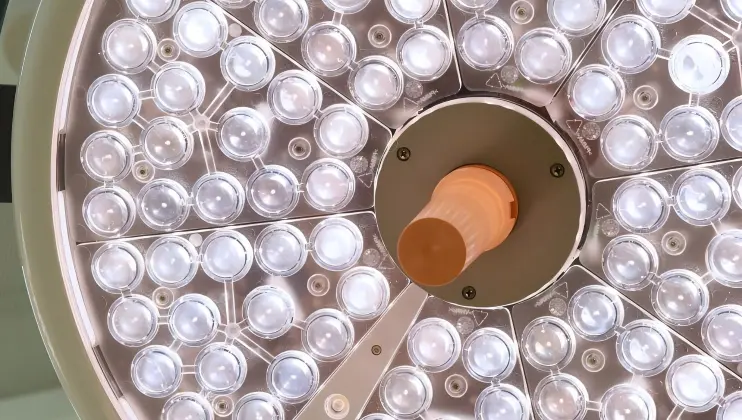
The size of the lamp head also plays an important role in shadow control.
A larger light-emitting surface allows light to come from a wider range of angles. This gives the surgical light more ways to illuminate the area around an obstruction.
Think about holding a small flashlight above a table. The light comes from a narrow direction. Your hand can easily block much of it.
Now imagine using a large lighting panel with many small lights spread across its surface. Even if your hand blocks some of them, the remaining lights can still reach the table.
This is why many operating room lights have large circular or petal-shaped lamp heads.
The light sources are spread across the head instead of being placed in one small central area. Their beams overlap at the working distance.
However, a larger lamp head is not always better in every situation. The design must also consider the size of the operating room, the working distance, and the depth of the surgical area.
A good design balances light coverage, shadow control, and ease of positioning.
5. How Does Shadowless Lighting Reach Deep Surgical Areas?
Lighting the surface of the patient’s body is not enough for many operations.
Some procedures involve deeper areas of the body. The surgeon must see inside the surgical opening, not just the surface.
This creates another lighting challenge. The edge of the opening, the surgeon’s hands, and medical instruments may block light from reaching deeper areas.
Modern surgical lights solve this problem through focused and overlapping beams.
The light sources are designed to direct their beams toward a specific working area. The beams come together to provide useful illumination at the selected distance.
A good surgical light also maintains sufficient brightness as the light travels into the surgical field.
This ability is related to illumination depth. It describes how well a light can provide useful illumination at different depths.
For example, a light with an illumination depth of 800 mm is designed to support lighting over a substantial working range, based on its stated test conditions.
This feature is especially important for procedures that require clear visibility inside deeper surgical areas.
Hospitals should compare both central illumination and illumination depth when selecting surgical operating lights.
6. The Role of LED Technology in Shadowless Lighting
LED technology has greatly improved modern surgical lighting.
Older surgical lights often used halogen bulbs. They could provide strong illumination, but they also produced more unwanted heat. Their light sources also needed more frequent replacement.
LED surgical lights use many small light-emitting diodes. Each LED can work as an independent light source. This gives manufacturers more freedom to arrange the lights across the lamp head.
LED technology offers several benefits for shadow control and daily use.
One benefit is flexible light distribution. Manufacturers can adjust the position and direction of each LED. This helps create an even light field and reduces the impact of blocked beams.
Another benefit is lower heat output. Modern LED systems can provide strong illumination with less unwanted heat around the surgical area. This supports a more comfortable working environment for surgeons and patients.
LEDs also have a long service life. Many medical LED lights are designed to work for tens of thousands of hours. This reduces the need for frequent light source replacement.
Color quality is another important factor. Surgeons need to recognize different tissue colors clearly. A high color rendering index helps the surgical team see colors more naturally.
For these reasons, many hospitals now consider LED operating room lights when upgrading their operating rooms.
However, LED technology alone does not guarantee excellent shadow control. The arrangement of the LEDs and the optical design remain important.
7. What Factors Affect the Shadow Control of Surgical Lights?
Not every shadowless surgical light provides the same lighting performance. Several design factors work together to determine how well a lamp reduces shadows.
The first factor is the number and arrangement of light sources. A well-designed lamp spreads its LEDs across the light head. This allows light to reach the surgical field from different directions.
The second factor is the size of the light-emitting surface. A wider surface can provide more angles of illumination. This helps reduce dark areas caused by the surgeon’s hands or head.
The third factor is beam direction. Light beams need to overlap in the correct working area. Poorly directed beams may create uneven brightness.
The fourth factor is illumination depth. A surgical light should provide useful light both on the body surface and inside the surgical opening.
The fifth factor is lamp positioning. Even a high-quality light may create unwanted shadows if it is placed incorrectly. The surgical team needs to adjust the lamp according to the procedure and working position.
These factors should be considered together. A high lux value alone does not mean that a surgical light has excellent shadow control.
Hospitals should also review the manufacturer’s test information and compare performance under similar conditions. The types of surgical lighting guide can help buyers understand the differences between common lighting designs.
8. Why Is Shadowless Lighting Important During Surgery?
Shadow control is not only about making an operating room look brighter. It directly affects how well surgeons can see the surgical field.
During an operation, several people may work around the patient. The surgeon, assistants, and nurses may all move their hands and equipment near the light path.
Without proper shadow control, these movements can create dark areas. The surgeon may need to adjust the lamp repeatedly to restore visibility.
A well-designed shadowless surgical light reduces this problem. It helps maintain more stable illumination even if part of the light is blocked.
Clear lighting also helps surgeons recognize tissue details. It supports accurate observation of color, shape, and surface changes.
Comfort matters too. Uneven light and excessive glare can cause visual discomfort during long procedures. Stable and well-distributed lighting helps create a better working environment.
This is why shadow control is an important factor when hospitals purchase medical surgical lights.
The goal is not simply to produce the brightest possible light. The goal is to provide suitable illumination throughout the procedure.
9. How Can Hospitals Choose a Surgical Light With Good Shadow Control?
Hospitals and medical equipment distributors should pay attention to more than the product appearance or advertised brightness.
The first step is to check the lighting specifications. Important details include central illumination, illumination depth, color rendering, color temperature, and light field size.
The second step is to understand the light head design. Buyers should check how many LEDs are used and how they are distributed across the lamp head.
The third step is to consider the number of lamp heads. Single-head models may suit certain operating rooms and procedures. Dual-head systems can provide light from different directions and offer more flexibility.
The fourth step is to check the adjustment system. Flexible arms and easy-to-use handles allow medical staff to position the lamp according to their needs.
Finally, buyers should review product quality, certifications, warranty terms, and after-sales support. These factors are important for long-term equipment use.
For hospitals that need flexible lighting, a mobile surgical light may also be worth considering. It can be moved between suitable rooms and used as an additional lighting option.
A careful comparison helps hospitals select equipment that matches their actual surgical needs rather than focusing on one specification alone.
10. Grace Medy: A Surgical Lights Supplier for Hospitals
Choosing the right manufacturer is another important part of surgical lighting procurement.
Supplier information and product specifications should always be checked against the model selected for purchase.
Grace Medy is a medical equipment manufacturer and supplier based in Hebei, China. The company provides different types of surgical lights for hospitals, medical distributors, and healthcare projects.
Its product range includes single-head LED surgical lights, dual-head LED surgical lights, and mobile surgical lights.
These products offer features such as adjustable illumination, different color temperature settings, flexible positioning, and long-life LED light sources. Selected models also support HD camera and medical monitor integration.
As a surgical lights supplier, Grace Medy supports different purchasing requirements, including product selection and OEM customization.
For distributors and hospital procurement teams, comparing the lamp structure, lighting performance, and after-sales service can help identify a suitable solution.
You can explore the Grace Medy surgical lights collection to learn more about available models.
Conclusion
Surgical lights do not completely remove shadows. Instead, they use multiple light sources, overlapping beams, and carefully designed lamp heads to reduce dark areas.
LED technology has made this process more flexible and efficient. It also supports better light distribution, lower heat, and longer service life.
Understanding these principles helps hospitals and medical distributors make better purchasing decisions. The right surgical light should provide stable illumination, good color quality, sufficient depth, and reliable shadow control.