
Surgical operating room lights are essential equipment in every hospital surgical department. They provide clear illumination, help surgeons see small details, and support accurate work during different procedures. However, buying a surgical light is not only about checking its brightness or appearance. Hospitals also need equipment that can operate reliably for many years without frequent repairs or replacement.
Durability is especially important for hospitals with busy operating rooms. A lighting failure can interrupt a procedure, affect the surgical team’s work, and create additional maintenance costs. For hospital managers and medical equipment buyers, understanding the factors that affect surgical light durability is an important part of purchasing decisions. This guide explains how to evaluate the service life, structure, performance, and maintenance needs of surgical operating room lights.
LED Light Source Life and Long-Term Performance
The LED light source is one of the first things hospitals should evaluate. Traditional halogen surgical lights use bulbs that need regular replacement. Modern LED surgical lights offer a longer rated service life and generally lower energy consumption. This reduces the need for frequent light source replacement and helps hospitals manage long-term operating costs.
Many medical LED lights have a rated service life of 40,000 to 60,000 hours or more, depending on the design and operating conditions. However, buyers should understand that rated LED life does not mean the entire surgical light will work without maintenance for the same number of hours. The light source may continue producing light, but other components, such as power supplies, control panels, and suspension arms, may need attention during this period.
A reliable LED surgical light should also maintain stable brightness and color quality during normal use. Gradual brightness reduction can affect visibility, especially during procedures that require careful examination of tissue. Hospitals should ask manufacturers for information about LED performance over time, expected brightness changes, and replacement options.
For example, Grace Medy’s mobile surgical light uses 48 LED bulbs and has a rated average LED lifespan of at least 60,000 hours. It provides an illumination range of 60,000–140,000 lux and a color rendering index of at least 95. These specifications offer buyers a useful starting point for evaluating long-term lighting performance. Hospitals can also compare different LED surgical lights based on their clinical needs and expected daily usage.
Light Head Structure and Material Quality
The structure of a surgical light directly affects its durability. A light head must remain stable during daily operation, cleaning, and repeated movement. Poor materials or weak connections may lead to loose parts, surface damage, or difficulties in adjusting the light position.
Hospitals should examine the housing material, protective surface, joints, handles, and internal connections. A strong housing protects internal components from everyday impacts and supports regular cleaning. Smooth surfaces are also important because dust and dirt should not collect easily around the light head.
The design of the lamp housing deserves attention too. A fully enclosed structure can reduce the areas where dust may collect. This is useful in operating rooms that follow strict cleaning and air management procedures. However, a dust-resistant design should not be treated as proof of complete infection protection. Buyers should check the manufacturer’s cleaning instructions and relevant product documents.
The handles also need to be durable. Surgical lights are moved and adjusted many times during daily use. Detachable handles should be easy to remove, clean, and sterilize according to the manufacturer’s instructions. Check whether replacement handles are available and whether they remain secure after repeated installation.
The suspension connection between the lamp head and its arm should also be strong. A well-designed structure helps the light stay in the selected position instead of moving unexpectedly. Hospitals should test the movement and locking functions before purchasing the equipment.
Heat Control and Electrical System Reliability
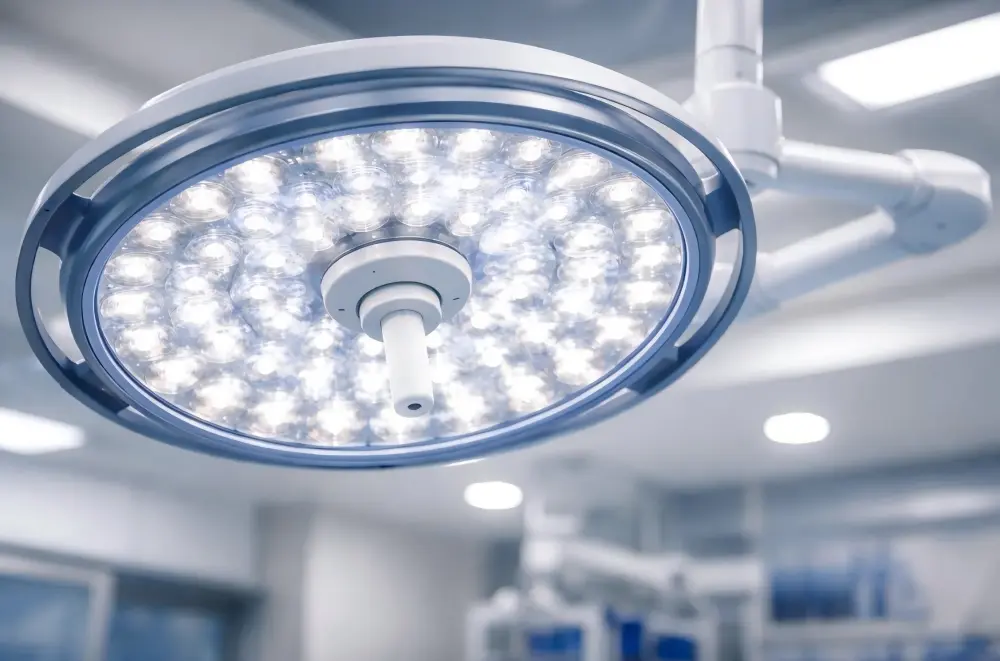
Heat management is another important factor in surgical light durability. Excessive heat can affect the comfort of surgeons and patients. It may also place additional stress on electronic components over time. Modern LED technology generally produces less unwanted heat than traditional halogen lighting, but LED equipment still needs effective heat management.
Hospitals should not judge heat performance by brightness alone. A light may produce high illumination but still have an unsuitable heat level for its intended use. Buyers should compare irradiance, temperature rise, and the manufacturer’s test information.
For example, Grace Medy’s mobile surgical light has an irradiance rating of no more than 550 W/m². Its stated temperature rise is no more than 1°C at the surgeon’s head level and 2°C in the surgical field. These figures help buyers understand the product’s thermal performance. Actual results should always be reviewed under the stated testing conditions.
Electrical components are equally important. The power supply, control panel, wiring, and battery system should work reliably under normal operating conditions. Unstable electrical connections can cause flickering, sudden shutdowns, or control problems. Hospitals should ask for the relevant electrical safety documents and confirm that the product is suitable for the voltage and frequency used in their facilities.
A backup battery can provide additional support during power interruptions. However, the battery also requires regular inspection and replacement according to its condition and the manufacturer’s recommendations. Buyers should check battery operating time, charging requirements, and replacement costs before placing an order.
Hospitals comparing LED surgical lights and halogen surgical lights should consider the full operating life of the equipment. A lower initial price may not always mean lower long-term costs, especially if bulbs, power components, or other parts require frequent replacement.
Suspension Arms, Movement, and Position Stability
The suspension arm is often overlooked during purchasing, but it plays an important role in the daily performance of a surgical light. Ceiling-mounted lights need to move smoothly around the operating table and remain stable after adjustment. A weak suspension system may gradually become difficult to control or fail to hold the selected position.
A good suspension arm should support the lamp head without unwanted movement. Its joints should allow smooth rotation, and the light should remain in position after the surgeon or operating room staff releases the handle. Hospitals should test the arm in different directions and check whether it can reach the required working areas.
The balance of the arm is also important. If the lamp head feels too heavy or moves unevenly, staff may need extra effort to adjust it. Repeated movement can place additional stress on the joints and connection points. Buyers should pay attention to the arm’s load capacity, movement range, locking function, and adjustment feel.
For ceiling-mounted models, installation quality is another part of long-term durability. The ceiling structure must support the equipment’s weight, and the mounting system should follow the manufacturer’s installation requirements. Incorrect installation may lead to vibration, poor positioning, or mechanical problems.
Hospitals with more than one operating room may also consider mobile surgical lights. These units provide flexibility and can be moved between suitable rooms. However, buyers should check the stability of the base, wheel quality, brake system, and power cable protection. A stable mobile base helps prevent unwanted movement during use.
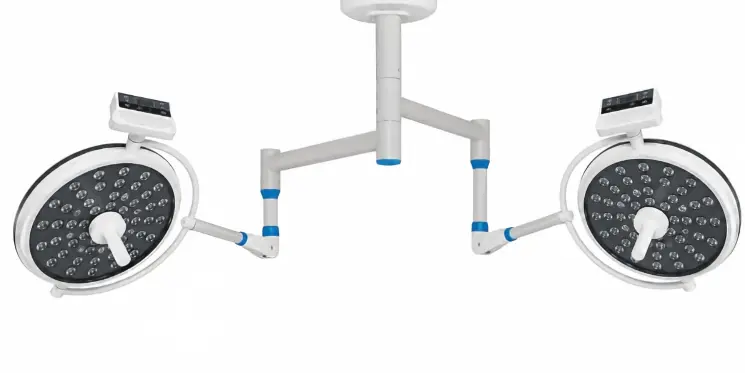
The mobile surgical light and dual-head LED surgical light are two configurations that buyers can compare based on their operating room layout, lighting needs, and installation conditions.
Maintenance, Cleaning, and Daily Use
Even a well-built surgical light needs proper maintenance. Regular inspection helps hospitals identify small problems before they affect daily operation. A clear maintenance plan can also extend the useful life of the equipment and reduce unexpected repair costs.
Cleaning is one of the most important daily tasks. Surgical lights are used in areas that require strict hygiene control. Staff should follow the manufacturer’s instructions for cleaning the lamp housing, handles, control panels, and other accessible surfaces. Strong chemicals or unsuitable cleaning methods may damage protective coatings, seals, or plastic components.
The sterilizable handle should be checked regularly for cracks, loose connections, and surface damage. If the handle cannot be attached securely, it should be replaced before further use. Hospitals should also make sure that cleaning and sterilization methods match the handle’s approved specifications.
Preventive maintenance should cover the electrical system, LED modules, suspension arms, joints, brakes, control buttons, and backup battery. Staff should look for unusual noise, unstable movement, flickering, reduced brightness, and loose connections. Any problem affecting safe operation should be reported and handled by qualified service personnel.
The following table provides a simple maintenance reference for hospital equipment teams.
| Component | What to Check | Maintenance Focus |
|---|---|---|
| LED light source | Brightness and uneven illumination | Check output and LED module condition |
| Lamp housing | Cracks, dust, and surface damage | Clean with approved products |
| Suspension arm | Movement, balance, and stability | Inspect joints and locking functions |
| Electrical system | Cables, switches, and power supply | Check connections and safety |
| Sterilizable handle | Cracks and loose fitting | Clean and replace when necessary |
| Mobile base | Wheels and brakes | Check stability and movement |
| Backup battery | Charging and operating time | Test and replace according to condition |
Hospitals should keep maintenance records for each surgical light. These records can include installation dates, inspection results, repairs, replacement parts, and service history. They help hospital managers understand the actual condition of the equipment and plan future maintenance budgets.
How to Choose Durable Surgical Lights for Hospitals
Selecting durable surgical lights requires more than comparing product prices and illumination levels. Buyers should evaluate the equipment as a complete system, including its light source, housing, suspension structure, electrical parts, and after-sales support.
The first step is to define the intended use. A hospital performing major surgery may need a dual-head ceiling-mounted system with a wide movement range. Smaller operating rooms may work well with a single-head model. Facilities that need flexible equipment may prefer a mobile surgical light. The choice should match the room size, ceiling structure, and type of surgery.
Next, compare the technical specifications. Important details include LED lifespan, illumination range, color rendering index, adjustable color temperature, irradiance, illumination depth, and dimming performance. Hospitals should request product documents instead of relying only on sales descriptions. They should also confirm that the equipment meets the applicable requirements in the destination market.
The surgical light selection guide can help buyers understand these performance factors. It is also useful to review different types of surgical lights before deciding on the most suitable configuration.
Supplier experience and after-sales service are equally important. Buyers should ask about warranty coverage, spare parts, technical support, installation guidance, and expected delivery times. A supplier that can provide clear product specifications and maintenance instructions makes long-term equipment management easier.
Grace Medy is a surgical lights supplier offering LED operating lights, including mobile and dual-head models, for hospitals and medical equipment distributors. Buyers can request product specifications, available configurations, and quotations based on their project requirements.
Conclusion
Evaluating the durability of surgical operating room lights requires attention to every major part of the equipment. LED lifespan, material quality, heat control, electrical reliability, suspension arm stability, and maintenance support all affect long-term performance.
Hospitals should look beyond the initial purchase price and consider how the equipment will perform throughout its service life. Comparing technical documents, testing movement and positioning, checking warranty conditions, and confirming spare part availability can help buyers make better decisions.
A durable surgical light should provide stable illumination, reliable movement, and convenient maintenance during everyday hospital use. Careful product evaluation helps hospitals reduce unnecessary repair costs and maintain a dependable operating room environment.