
Future of the Medical Surgical Bed Market: Trends, Technology, and Opportunities
The medical surgical bed market is changing quickly.
Hospitals are looking for beds that can do more than support a patient. They need equipment that can improve patient comfort, reduce staff workload, and support safer care.
At the same time, aging populations and the growing number of patients with long-term health needs are creating more demand for hospital beds. Electric hospital beds, ICU beds, and smart hospital bed technology are becoming more important in both new hospitals and replacement projects.
So, what will the medical surgical bed market look like in the next few years?
This article looks at the main trends that are shaping the future of the market and what hospital buyers should consider when planning their next purchase.
Medical Surgical Bed Market Outlook
The global medical surgical bed market is expected to grow steadily through 2035.
Different market research companies give different market sizes and growth rates. This is mainly because they use different definitions and include different types of hospital beds in their reports.
However, the overall direction is clear: the market is moving toward steady growth.
Several market forecasts in the original research place the market at around USD 4 billion to USD 5 billion in the middle of the 2020s, with many forecasts expecting it to reach around USD 7 billion to USD 8 billion by 2035.
This growth is being supported by several factors.
The global population is getting older. More people need hospital care, rehabilitation, and long-term care. Hospitals are also investing in new facilities and replacing older equipment.
For medical equipment suppliers and hospital procurement teams, this means demand for hospital beds is likely to remain strong.
What Is Driving the Medical Bed Market?
An Aging Population
One of the biggest drivers is population aging.
According to the source material, the number of people aged 60 and above is expected to reach about 1.4 billion worldwide by 2030. By 2050, this number could reach 2.1 billion.
Older patients often need longer hospital stays and more support with movement and daily care.
This creates demand for beds that can help nurses and caregivers adjust patient positions more easily.
Modern electric hospital beds are especially useful in this area because staff can adjust the bed height and position with less physical effort.
More Chronic Diseases
Chronic health conditions are also increasing the need for hospital care.
Patients may need longer treatment and more support during recovery. This is increasing demand for general hospital beds, ICU beds, rehabilitation beds, and other special-purpose beds.
The ICU bed segment is expected to grow faster than the overall medical bed market in some forecasts.
This creates opportunities for manufacturers that can provide reliable ICU hospital beds and related equipment.
Nursing Staff Shortages
Hospitals also face staff shortages in many regions.
As a result, buyers are paying more attention to equipment that can reduce manual work.
Electric height adjustment, adjustable backrests, easy patient positioning, low-height settings, and bed-exit alerts can all help staff work more efficiently.
This means the future of hospital beds is not only about the patient. It is also about making daily work easier for nurses and caregivers.
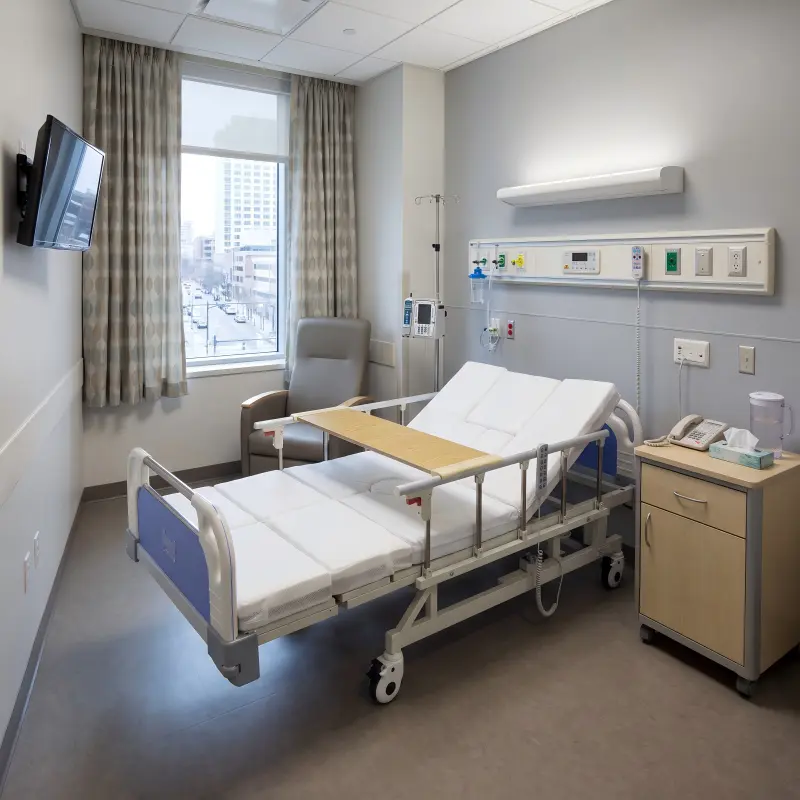
Electric Hospital Beds Will Become More Common
Electric beds are one of the clearest trends in the medical bed market.
Manual beds are still widely used in some hospitals and lower-cost healthcare facilities. However, electric models are becoming more popular because they allow staff and patients to adjust the bed more easily.
A modern electric hospital bed may offer:
Electric height adjustment
Adjustable back and leg sections
Low and high positions
Trendelenburg positioning
CPR functions
Side rails and safety features
Battery backup
Easy-to-use hand controls
The exact features depend on the model and its intended use.
For general wards, buyers may only need basic electric adjustment. ICU and high-care environments normally require more functions.
This is why hospitals should choose beds according to actual patient and staff needs instead of simply buying the model with the most features.
Smart Hospital Beds Are the Next Step
The next stage of development is the smart hospital bed.
Smart bed technology can connect the bed with sensors and hospital information systems. Some systems can collect information about patient movement, bed position, and other basic patient-care data.
Bed-exit alerts are another useful feature. The system can alert staff when a patient leaves the bed unexpectedly.
In the future, more hospital beds may become part of a connected hospital system.
Instead of working as separate equipment, the bed may communicate with nurse stations, patient monitoring systems, and hospital software.
This could help hospitals manage patient care and equipment more efficiently.
However, smart technology should have a clear purpose. Hospitals should not pay more for features that do not provide real value in their specific environment.
Patient Safety Will Shape Future Bed Design
Patient safety is another important part of the future medical surgical bed market.
Falls and pressure injuries can increase treatment time and hospital costs. Bed manufacturers are therefore focusing more on features that support safe patient care.
Low-height positions can reduce the distance between the patient and the floor if a fall occurs.
Adjustable positioning can make it easier for staff to move and care for patients.
Some advanced beds can also monitor movement and provide alerts when a patient may be trying to leave the bed.
Pressure injury prevention is another important area.
Future hospital beds are likely to work more closely with hospital bed mattresses, sensors, and positioning systems to provide better support for patients who spend long periods in bed.
ICU Beds Will Remain a High-Value Segment
ICU beds are expected to remain one of the most important parts of the medical bed market.
Critical-care patients often need more frequent positioning and closer monitoring. ICU beds therefore require more functions than standard ward beds.
A modern ICU bed may include electric positioning, CPR functions, a patient weighing system, battery backup, adjustable side rails, and support for medical equipment.
Some beds are also designed to work with X-ray equipment and other hospital systems.
Hospitals should consider the complete ICU setup when purchasing a bed. The bed must work well with monitors, ventilators, infusion pumps, mattresses, and other equipment.
This makes ICU bed suppliers an important consideration for large hospital projects.
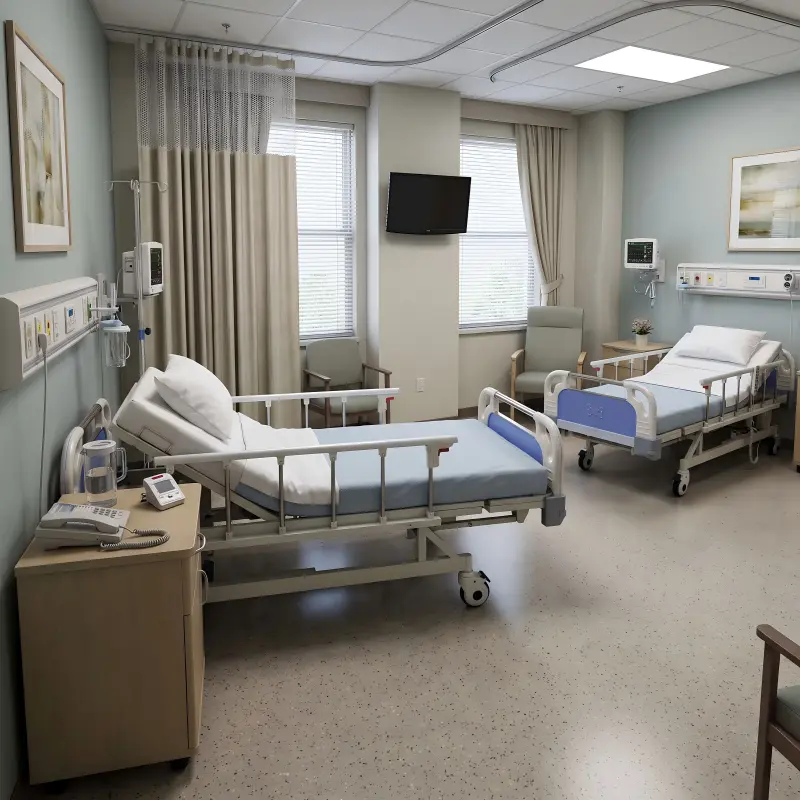
What Hospital Buyers Will Focus on in the Future
Hospital procurement is also changing.
Buyers are looking beyond the initial purchase price. They are becoming more interested in the total cost of owning and using a hospital bed.
A low-cost bed may seem attractive at first. But if its motors fail often, spare parts are difficult to find, or service takes too long, the real cost can become much higher.
Future purchasing decisions will focus more on:
Reliability: The bed should work consistently in daily hospital use.
Maintenance: Parts should be easy to replace and service support should be available.
Safety: The design should support patient and staff safety.
Ease of use: Nurses should be able to adjust the bed quickly.
Total cost: Buyers should consider maintenance, spare parts, mattress replacement, and service costs.
Compliance: Medical beds must meet the requirements of their target market.
For international buyers, working with an experienced hospital bed manufacturer can make product selection and documentation easier.
Regional Markets Will Create New Opportunities
North America remains one of the largest markets for hospital beds. The region has high demand for electric beds and continues to replace older equipment.
Europe also has strong demand, especially for products that focus on patient safety, infection control, and energy efficiency.
Asia-Pacific is an important growth market. New hospitals, healthcare investment, and a growing elderly population are creating more demand for medical equipment.
There are also opportunities in Southeast Asia, the Middle East, and Africa.
Many countries in these regions are investing in new hospitals and expanding healthcare services. This creates demand for complete hospital equipment solutions rather than individual products.
For suppliers, this means regional needs will become increasingly important. A product that works well in one market may need different features, documents, or certifications in another.
OEM and ODM Services Will Become More Important
As the global market becomes more competitive, buyers are looking for more flexible suppliers.
Distributors may want their own brand name, packaging, product configuration, or specifications.
This is increasing demand for OEM medical equipment and ODM services.
Manufacturers that can provide product customization, spare parts, technical support, and stable production capacity will have an advantage.
For large hospital projects, buyers may also prefer suppliers that can provide several types of beds from one source.
This can simplify purchasing, shipping, installation, and after-sales service.
Sustainability Will Also Affect Future Hospital Beds
Sustainability is becoming another consideration for healthcare buyers.
Hospitals want equipment that can remain in service for many years. A durable bed can reduce the need for frequent replacement.
Manufacturers can support this trend through stronger materials, replaceable components, better energy use, and easier maintenance.
The future hospital bed may therefore be designed not only for patient comfort, but also for a longer working life.
This is especially important for large hospitals that need hundreds or thousands of beds.
Grace Medy and the Future of Hospital Bed Equipment
Grace Medy is a medical equipment manufacturer and supplier that provides hospital beds, electric beds, and other hospital equipment for international buyers.
Its product range covers different hospital needs, including general ward, ICU, orthopedic, pediatric, and rehabilitation applications.
For distributors and hospital procurement teams, choosing a supplier with both product range and OEM/ODM capability can make future equipment planning easier.
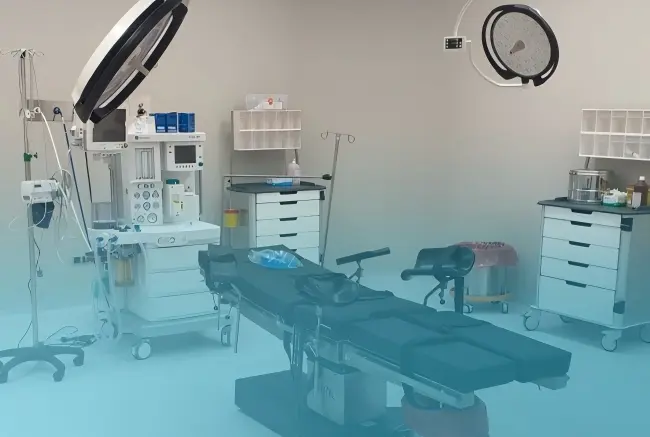
Grace Medy also supplies operating tables, allowing buyers to source hospital beds and operating room equipment from the same supplier when suitable.
What Will the Medical Surgical Bed Market Look Like by 2035?
By 2035, the medical surgical bed market will likely look very different from today’s market.
Electric adjustment will become more common. Smart functions will become easier to integrate. Patient safety features will receive more attention.
ICU and specialty beds will continue to offer more advanced functions, while general hospital beds will also become more comfortable and easier to operate.
At the same time, buyers will pay more attention to product reliability, maintenance, service, and total cost.
The market will not simply be about selling more hospital beds. It will be about providing better solutions for patients, nurses, hospitals, and healthcare systems.
Final Thoughts
The future of the medical surgical bed market is being shaped by four major trends: an aging population, growing healthcare demand, electric bed adoption, and smart hospital technology.
Hospitals are moving from basic beds toward equipment that can support patient safety, improve staff efficiency, and connect with modern healthcare systems.
For medical equipment buyers, the best strategy is to look beyond today’s price. Consider how the bed will perform over the next five to ten years.
A reliable electric hospital bed, a suitable ICU hospital bed, and a strong supplier relationship can all play an important role in long-term hospital planning.
The medical bed market is moving toward smarter, safer, and more efficient solutions. Manufacturers that can combine reliable products with flexible service will be better positioned to meet the needs of the next generation of hospitals.