
Selecting the Best Operating Room Table Clamp: A Practical Buying Guide
Choosing the right operating room table clamp may seem like a small part of surgical equipment purchasing. However, the wrong clamp can cause serious problems.
A clamp that does not fit the table rail may move during a procedure. A weak clamp may not support the accessory properly. A material that cannot handle repeated cleaning and sterilization may also wear out quickly.
For hospitals, distributors, and medical equipment buyers, the key is not simply finding the cheapest clamp. The right choice should match the operating table, accessories, procedure, load requirements, and cleaning process.
This guide explains the main points to check before buying an operating room table clamp.
What Is an Operating Room Table Clamp?
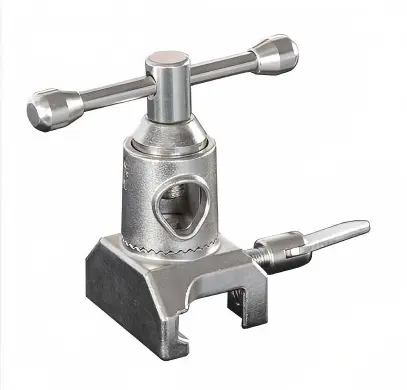
An operating room table clamp is a mounting device used to attach accessories to a surgical table. It can connect equipment such as arm boards, leg holders, supports, retractor systems, and positioning devices to the table.
A good clamp should keep the accessory stable while allowing medical staff to adjust or remove it when needed.
Depending on the table and accessory, different clamp designs may be used.
Common Operating Room Table Clamp Types
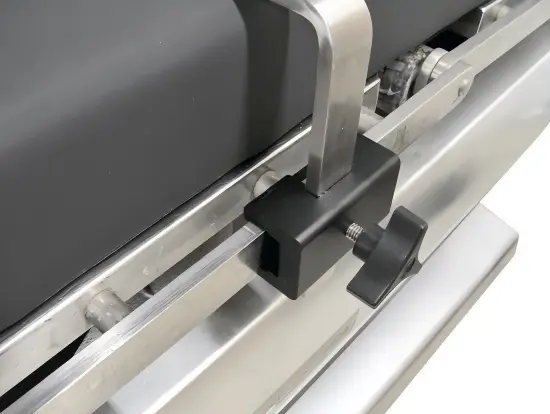
Side-rail clamps attach directly to the side rail of an operating table. They are commonly used with arm boards, leg supports, head supports, and other positioning accessories.
Socket clamps connect accessories through a post or rod. They are useful when staff need to change the position or angle of an accessory.
Blade clamps are designed for flat posts or flat accessories. Their low-profile design can help keep the accessory close to the table.
Orthopedic and traction clamps are designed for heavier accessories, such as traction frames and support systems used during orthopedic procedures.
The most important point is simple: the clamp must match the accessory and the operating table.
How to Match a Clamp With Your Operating Table
Compatibility should be your first check.
Many buyers assume that a “standard rail clamp” will fit every surgical table. This is not always true. Operating tables can use different rail sizes and mounting systems.
For example, common rail systems may have different width and height measurements. A clamp designed for one rail may not lock correctly on another.
Before placing an order, check:
Your operating table model and manufacturer
Side-rail dimensions
Clamp opening size
Accessory post or rod size
Locking position and available space around the rail
If your hospital already uses a particular, start with the manufacturer’s rail specification.
You should also check the accessory that will be connected to the clamp. A clamp may fit the table but still fail to fit the accessory.
For example, some accessories use round posts, while others use flat posts. Measuring the post before ordering can prevent compatibility problems and unnecessary returns.
OEM or Universal Clamp?
OEM clamps are designed for specific table systems. They can be a good choice when you need a direct replacement.
Universal or aftermarket clamps may work with several table models, but the word “universal” should not be accepted without checking the actual dimensions.
Ask the supplier to confirm compatibility with your exact table model.
If possible, provide photos and measurements of your table rail and accessory post. This makes it much easier for the supplier to recommend the correct operating table accessories.
Choose the Right Clamp Material
Material affects the service life of a table clamp.
For hospital use, stainless steel is a common choice because it offers good corrosion resistance and can handle regular cleaning and sterilization.
Stainless Steel vs. Aluminum
304 stainless steel is suitable for many reusable surgical accessories. It is strong, easy to clean, and resistant to corrosion. It is especially useful for clamps that are frequently exposed to cleaning agents or sterilization.
Aluminum is lighter than stainless steel. This can be useful when the accessory needs to be moved frequently or when reducing equipment weight is important.
However, aluminum usually needs a protective surface treatment to improve its resistance to moisture and chemicals.
For most hospital applications, choose the material based on the cleaning process, expected service life, load requirement, and working environment.
Do not choose a clamp simply because it looks like stainless steel. Ask the supplier for the actual material specification.
Check the Load Capacity Carefully
Load capacity is another important factor when selecting a surgical table clamp.
A clamp may be used to support a small positioning accessory in one procedure and a much heavier accessory in another. The clamp rating must be suitable for the complete setup.
Do not look only at the clamp’s maximum load. Consider the weight of:
The patient
The clamp
The attached accessory
Any additional support equipment
The operating table may also have different load limits depending on the patient’s position.
For example, a table may support a high load when the patient is centered and positioned normally, but the safe load may change when the table is tilted or the patient is moved to a different position.
Always check the table’s instructions and the accessory manufacturer’s load information.
For larger patients or heavy orthopedic equipment, look for a suitable bariatric operating table or heavy-duty accessory system rather than assuming that a stronger-looking clamp is enough.
Choose a Locking System That Is Easy to Use
A clamp should be secure, but it should also be easy for staff to operate.
Medical staff may need to adjust an accessory during a procedure. A difficult locking system can waste time and make positioning harder.
Three common options are quick-release, spring-loaded, and twist-lock designs.
Quick-release clamps are useful when accessories need to be changed frequently.
Spring-loaded clamps can be convenient when one-handed operation is important.
Twist-lock clamps normally take a little more time to operate but can give the user a clear feeling that the clamp is tightened.
The best choice depends on the hospital’s workflow.
Before purchasing, test the clamp if possible. Check whether the handle is easy to operate, whether the clamp locks evenly, and whether the accessory stays firmly in place.
A reliable patient positioning system should make adjustments simple without reducing stability.
Sterilization and Cleaning Requirements
Operating room equipment needs regular cleaning. Some clamps may also need sterilization.
Before buying, confirm how the clamp should be cleaned and whether it can be sterilized.
Ask the supplier for clear information about:
Approved cleaning methods
Sterilization temperature and process
Suitable cleaning agents
Maximum recommended service conditions
Maintenance instructions
A clamp with moving parts should also be checked regularly.
Look for signs of wear, loose parts, cracks, corrosion, or damage. Make sure the locking mechanism continues to work smoothly.
Do not continue using a damaged clamp just because it can still be attached to the rail. A damaged mounting system may become unstable during use.
For hospitals that are building a complete operating room equipment purchasing plan, cleaning and maintenance requirements should be included before the purchase order is approved.
Is the Clamp Suitable for C-Arm and Imaging Procedures?
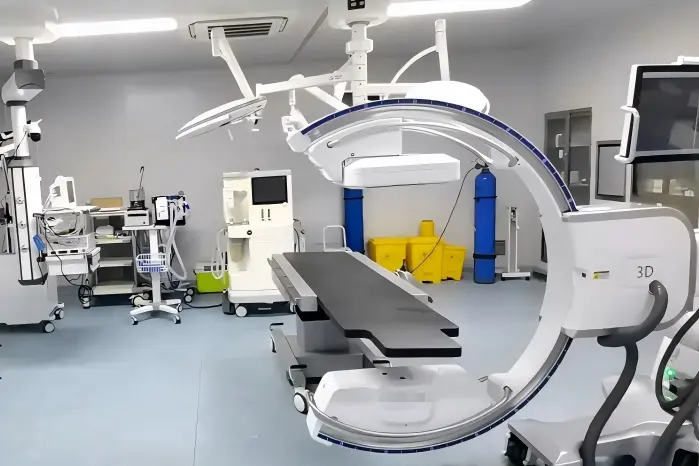
Some surgical procedures use mobile X-ray equipment such as a C-arm.
In these cases, the position of the clamp and accessory can affect access to the imaging area. Metal parts may also appear in the image if they are placed in the wrong position.
If the clamp will be used during orthopedic, spine, or other imaging procedures, check whether the complete setup allows the C-arm to move around the surgical area.
The clamp should not block the area that needs to be imaged.
This is also why a suitable radiolucent surgical table can be important for imaging-based procedures.
Before purchase, ask the supplier whether the clamp and attached accessory have been tested or approved for the intended imaging setup.
Check Safety and Product Quality
A good clamp should not only fit the rail. It should also provide stable and reliable support during daily use.
Check the following points before purchasing:
-
Fit: The clamp must match the table rail and accessory post.
-
Stability: The accessory should not move after the clamp is locked.
-
Material: Confirm the actual material and surface treatment.
-
Load rating: Check the complete system, not only the clamp.
-
Cleaning: Confirm cleaning and sterilization requirements.
-
Locking: Make sure staff can lock and release the clamp easily.
-
Documentation: Ask for product specifications, instructions, and relevant compliance documents.
These checks are especially important when purchasing clamps in large quantities for hospitals or distributors.
Why Clamp Compatibility Matters for Surgical Accessories
An operating table clamp is only one part of the patient positioning system.
It works together with arm boards, leg holders, head supports, traction systems, retractor systems, and other operating table accessories.
If different accessories are purchased from different suppliers, compatibility can become more difficult.
For this reason, buyers should consider the whole mounting system instead of purchasing each clamp separately.
A supplier with experience in surgical table manufacturer solutions may also help confirm whether the clamp, rail, and accessories work together.
This can be especially useful for hospitals that are replacing old operating tables or building new operating rooms.
Practical Buying Checklist
Before placing an order for an operating room table clamp, confirm these key points:
-
Table compatibility: Does it fit your exact operating table rail?
-
Accessory compatibility: Does it match the accessory post or mounting system?
-
Load capacity: Can it safely support the intended setup?
-
Material: Is the material suitable for hospital cleaning and sterilization?
-
Locking system: Can staff operate it easily and securely?
-
Imaging use: Will it work properly with C-arm or other imaging procedures?
-
Documentation: Can the supplier provide specifications and required compliance documents?
A supplier should be able to answer these questions clearly before you place an order.
Final Thoughts
Selecting the best operating room table clamp is mainly about compatibility, stability, material, load capacity, and ease of use.
Do not choose a clamp only because it is advertised as “universal” or “medical grade.” First check the operating table rail, accessory post, load requirements, cleaning process, and intended surgical application.
For hospitals and medical equipment distributors, working with an experienced surgical table supplier can make the purchasing process easier. The supplier can help confirm dimensions, accessory compatibility, and the correct configuration before shipment.
Grace Medy provides operating tables and related operating room equipment for international medical equipment buyers. Its product range includes electric operating tables and other equipment used in modern operating rooms.
The goal is simple: choose a clamp that fits correctly, locks securely, is easy to maintain, and works reliably with your existing surgical table system.